
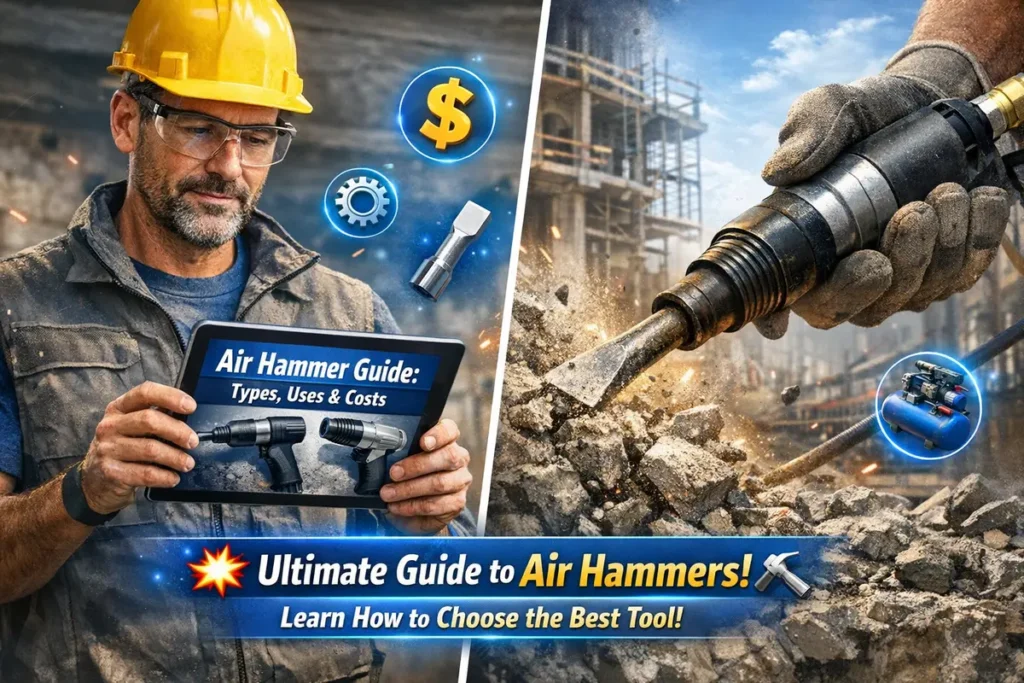
🔨 The Power Tool Market is Booming: Air Hammers Lead the Way
The global pneumatic tools market reached $5.2 billion in 2024 and continues growing at 4.8% annually. Air hammers remain among the most versatile and cost-effective tools for construction professionals and DIY enthusiasts, with 78% of contractors rating them as essential equipment for demolition and renovation work.
Whether you're tackling a home renovation project or working on a professional construction site, understanding air hammer capabilities can save you time and money. These pneumatic powerhouses have revolutionized demolition, chiseling, and material removal tasks across multiple industries.
Industry Market Data
National Association of Home Builders (NAHB) reports that pneumatic tool adoption has increased by 34% among residential contractors since 2020. The Power Tool Institute indicates that air-powered tools offer 15-25% better performance-to-cost ratios compared to electric alternatives in high-impact applications. Market research shows the average professional contractor owns 3-5 different air hammer attachments, with chisel bits being the most commonly purchased accessory.
Understanding Air Hammer Fundamentals
An air hammer, also known as a pneumatic hammer or air chisel, operates by using compressed air to drive a piston that strikes a chisel or cutting tool. This repetitive hammering action delivers powerful, controlled impacts perfect for breaking concrete, cutting metal, removing tiles, and countless other demolition tasks. The tool connects to an air compressor via a standard hose, requiring 90-100 PSI for optimal performance.
Essential Air Hammer Types and Configurations
Professional air hammers come in several configurations. Standard models weigh 2-4 pounds and deliver 2,000-3,500 blows per minute (BPM), ideal for general construction work. Heavy-duty industrial air hammers reach up to 5,000 BPM for concrete demolition and steel cutting. Compact models offer better maneuverability in tight spaces while maintaining impressive power output. According to This Old House tool reviews, vibration-dampened handles significantly reduce operator fatigue during extended use.
Common Air Hammer Applications
These versatile tools excel at multiple tasks. Contractors use air hammers for tile removal, brick chipping, rust removal from metal surfaces, and exhaust system work on vehicles. The interchangeable chisel system allows quick switching between flat chisels for scraping, pointed chisels for precision work, and panel cutters for automotive bodywork. Many professionals rely on their pneumatic hammer for mortar removal during restoration projects.
Installation and Operational Considerations
Proper setup ensures maximum performance and safety. Your air compressor should deliver at least 4-6 CFM (cubic feet per minute) at 90 PSI to power most air hammers effectively. Always use proper safety equipment including eye protection, hearing protection, and gloves. Regular lubrication of the tool's air inlet extends operational life significantly. Position yourself firmly when using the tool, as the reciprocating action can cause loss of control without proper grip.
Cost Factors and Budget Planning
Entry-level air hammer kits start around $40-80 for basic DIY models, while professional-grade tools range from $150-400. Factor in the compressor cost ($200-600 for suitable models) and chisel sets ($30-100). Operating costs remain minimal—primarily electricity for the compressor and occasional replacement bits. When planning your home improvement budget, considering quality tools like those featured at Easy Window Cost ensures you're making informed decisions about all your renovation investments.
| Tool Category | Power Rating (BPM) | Weight Range | Price Range |
|---|---|---|---|
| Entry-Level DIY | 2,000-2,500 BPM | 2-3 lbs | $40-$80 |
| Mid-Grade Professional | 2,500-3,500 BPM | 3-4 lbs | $100-$200 |
| Heavy-Duty Industrial | 3,500-5,000 BPM | 4-6 lbs | $200-$400 |
| Compact Specialty | 2,200-3,000 BPM | 1.5-2.5 lbs | $80-$150 |
Frequently Asked Questions About Air Hammers
Q: What size air compressor do I need for an air hammer?
A: Most air hammers require a compressor delivering 4-6 CFM at 90 PSI. A 20-gallon tank capacity or larger works best for continuous operation, preventing frequent cycling that can overheat smaller compressors. For occasional DIY use, a 6-gallon pancake compressor may suffice for short tasks.
Q: Can an air hammer break concrete?
A: Yes, air hammers effectively break concrete, especially when equipped with pointed or spade chisels. However, for thick concrete (over 4 inches), a dedicated demolition hammer or jackhammer provides better efficiency. Air hammers excel at removing thin concrete overlays, tile mortar beds, and precision concrete work.
Q: How often should I lubricate my pneumatic hammer?
A: Add 3-4 drops of pneumatic tool oil into the air inlet before each use. For heavy daily use, lubricate every 2-3 hours of operation. An inline oiler installed at the compressor provides automatic lubrication and significantly extends tool life while maintaining optimal performance.
Q: Are air hammers better than electric models?
A: Air hammers offer superior power-to-weight ratios and don't overheat during extended use. They're lighter, more durable in harsh environments, and cheaper to replace. Electric models provide greater portability without requiring a compressor but typically cost more upfront and have limited duty cycles.
Q: What safety equipment do I need when using an air hammer?
A: Always wear ANSI-rated safety glasses or a full face shield, hearing protection rated for 100+ decibels, heavy-duty work gloves, and steel-toed boots. For enclosed spaces, use respiratory protection against dust. Never operate without proper safety gear, as flying debris and noise levels pose serious injury risks.
Make Informed Tool Investment Decisions
Understanding the right air hammer for your project ensures efficiency and cost-effectiveness. Whether you're a professional contractor or DIY enthusiast, investing in quality pneumatic tools pays dividends through years of reliable performance. Ready to plan your next renovation? Visit our comprehensive resource center for expert guidance on all your project needs!